This episode is often said to be one of the best episodes in the franchise. I certainly think the concept is excellent but is it the best? Lets find out.
The beginning of the episode is the weakest part. It relies on an accident coupled with incompetence. I think they could have come up with a better way to get us to the story.
The Enterprise is at red alert. They are passing through ripples in time. These ripples shake the ship. They come to an unknown world that is the focus of the time ripples.
After Sulu’s console explodes, McCoy is called to the bridge. He injects Sulu with Cordrazine – a potentially dangerous medicine administered by the drop.
When the ship is rocked again McCoy accidentally injects himself. This part doesn’t really work for me. If cordrazine is measured by the drop why was there so much in the hypospray? That little nitpick out of the way Deforest Kelly does portray this very well.
Subjects failed to recognise acquaintances, became hysterically convinced that they were in mortal danger, and were seeking escape at any cost. Extremely dangerous to himself or to anyone else… Spock, on the effects of Cortrozine (TOS: The City on the Edge of Forever)
Given this description McCoy wants to get off the ship. That makes sense. Even a barren planet might seem appealing in those circumstances.
What makes less sense is how easily McCoy does this. The Enterprise is already at red alert. Despite this there is no extra security in the transporter room. Without any real effort McCoy knocks out the transporter chief and beams down.
Kirk leads a landing party to search for McCoy. For no particular reason, except the plot needs it, this seems to be a literal search – they can’t just pick McCoy’s life signs on the tricorder – or from orbit for that matter.
They discover extensive ruins. Spock calculates that they are 10,000 centuries old. His, and Kirk’s, attention is quickly drawn to a pulsating doughnut shaped object. I suppose I should call it a torus.
The doughnut introduces itself as the guardian of forever. It is a portal to the past. When asked if it is ‘machine or a being’ it states it is ‘both and neither’. Clearly the guardian attended the Royal Vorlon Collage of Not Giving a Straight Answer. Spock is irritated. I agree. I don’t like riddles either. (With the exception of the Voyager episode with that name.)
Kirk wonders if they can use the guardian to prevent McCoy’s accident. This feels like using a laser to remove a hangnail.
Unfortunately the doughnut doesn’t have an iris or a Walter Harriman. McCoy runs past and dives into the past. This is where the episode loses me a little. It is a pretty serious design flaw to allow any one, especially a drug-addled man, to get through.
Suddenly the landing party is all alone. McCoy has changed history. The Enterprise no longer exists. They are people out of time.
Time travel stories are always liable to create paradoxes. If McCoy changed history then the landing party shouldn’t exist either, but also McCoy would never have been born, and so on. (Wibbly Wobbly timey wimey)
Also none of the landing party manages to stop McCoy! You do have a stun setting!
Kirk and Spock head into the past. The doughnut cannot send them to the exact same point. It can only show the passing centuries at one speed. So it is less user friendly than a VCR!
Kirk and Spock arrive in 1930. They are there less than a minute before they commit a crime – stealing clothes off a fire escape. Literal seconds later they are caught by a police officer. Spock nerve pinches him but not before Kirk explains Spock’s ears: ‘He caught his head in a mechanical rice picker.’
Why didn’t Kirk bring Scotty? Surly having Spock along could create unnecessary complications. To show that there is no nitpicking depth I will not plunge – it was very lucky that the stolen clothes included a hat to cover Spock’s ears!
All kidding aside the episode is efficient at getting the characters where they need to be. After making a run for it they end up at the 21st Street Mission.
The first priority is to discover what McCoy did. Spock was monitoring the doughnut when he jumped through. Unfortunately, for reasons the episode doesn’t explain, he can’t access the data on his tricorder.
They are interrupted by Edith Keeler. She offers them work for $0.15 an hour. They start by cleaning the basement.
Keeler gets up on stage and talks about her, for want of a better word, philosophy. For all intents and purposes she is talking about the world Kirk and Spock know. I have to agree with Sfdebris. If I was homeless and hungry I don’t think that knowing that there would be a bright future would help me much.
The reason this is here is because the story depends on Kirk falling in love. Edith, therefore, has to be an intelligent and forward thinking woman. Despite the reputation Kirk is not the womaniser he is often said to be. That applies far more to Riker. (Look no further than his favourite planet.)
I think Edith is a little too on the nose. Talk of space craft and atomic power isn’t much good when you don’t know when, or if, you will eat tomorrow. I think the episode would have been better if she was a progressive thinker – not a seer. She is not literally a seer but that is how it comes across.
Some time later Spock has managed to build a computer. I don’t see how, but Spock is a genius.
Spock is also logical to a fault. He states, in a matter of fact way, that he needs platinum. I tried to look up the value of 5 lbs of platinum in 1930. I couldn’t find a result. However it is safe to say it would be beyond their means.
Kirk walks Edith home. (Spock works and Kirk gets a date. Now that does sound typical) They take a moment to look at the stars. Kirk talks about a writer who lived on a faraway planet. It is things like this that make Temporal Investigations label him a menace.
By the time Kirk returns Spock he has discovered that Edith Keeler is the focal point in time. (Apparently the platinum wasn’t important)
Meanwhile McCoy arrives and is yelling at the sky. He spots a homeless man stealing milk. He yells that he won’t kill him, grabs the man’s head, and passes out. The man checks McCoy’s clothes and finds his phaser. He accidentally kills himself.
The episode spends no time on this man. McCoy probably wasn’t even aware that he died. And I wasn’t aware he had a name. (Rodent according to Memory Alpha) His death, apparently, had no effect on the timeline one way or the other. This leads me to a tangent.
I don’t want to get into the behind the scenes stuff, at least not in depth, but I would be remiss if I didn’t say something. I am given to understand that the original version of this script was very different. If I am understanding correctly that draft did have a homeless character who would have been more important to the story. The script as written has the man’s death not matter at all. I suppose that is true of most of us.
McCoy finds his way to the mission. The cynic in me wants to say it was very convenient. Edith helps get out of sight into a back room. For her the only important thing is that he is in need.
Spock discovers what happened. Edith Keeler became the leader of a peace movement. This delayed the US’s entry into the second world war – which Germany then won. Edith had the right idea – but at the wrong time. To preserve the timeline Edith Keeler must die.
At the top of the stairs Edith stumbles. Kirk catches her saying it is not yet time – it is also not the way that history reported that she died.
McCoy seems to have a hard time believing he is in the past. This seems odd given the events of ‘Tomorrow is Yesterday.’
Quickly everything comes together. Kirk and Spock are reunited with McCoy. Edith crosses the street and is hit by a van. The horrible tragedy is that not only can Kirk not save her he also has to prevent McCoy from doing so.
The presentation of the ending never quite worked for me. It looks like the van had plenty of time to stop and chose not to. However that is getting into some real nitpicking territory.
The trio return to the present, which is the future, and for Scotty no time has passed. The final line of the episode: ‘Let’s get the hell out of here.’, was a big deal at the time. It is hard to imagine that now.
This is an excellent episode. It is one of the best of TOS. Kirk having to weigh personal feelings against larger considerations is very well done. The death of Edith Keeler allowed for the future to happen.
Star Trek is about a positive future. In order for that to happen an innocent woman had to die – not to mention millions of others in the three world wars. This story is very well told and I recommend it if you have not seen it.
I just wanted to say that I have checked this post. I really have. Unfortunately my particular combination of dyslexia and dyspraxia makes it really hard for me to spot typos. Please enjoy and I’ll try not to make too many errors.
Last time I talked about one of my favourite episodes of TOS. This time we’re looking at one at the other end of the spectrum.
When people talk about bad TOS Spock’s Brain is often talked about. I submit that Spock’s Brain isn’t that bad. The Alternative Factor, to the best of my memory, has no redeeming qualities. It is boring and stupid.
As we go through this lets see if that descriptor holds up…
The Enterprise is in orbit of a planet engaged in the dull side of exploration. They are performing a scan. While doing this there is a sudden, and to my mind, ill-defined disaster. Spock reports that everything within range of the sensors ‘winked out’. This is represented by overlaying stars across the screen.
Let’s talk for a moment about stakes. The stakes in this episode is the entire galaxy maybe the entire universe. In my opinion that is far too much. It is hard to get ones mind around those kinds of consequences. Not to mention that if our heroes can save the universe it makes it look silly that anything can challenge them.
This type of story can work in some circumstances. Doctor Who has done a universe in peril story a few times. I feel this kind of story works for Doctor Who in a way it doesn’t for Star Trek. The Doctor is, for all intents and purposes, a demigod. He understands time in all its wibbly-wobbly glory and can go anywhere in the universe. The Enterprise is very limited by comparison.
When I see an episode like The Alternative Factor I can’t help thinking about the other races in the universe. The Romulans must have detected the winking out too. Yet they can do nothing about it and, I realise this is personal taste, that never quite sat right with me.
After the ‘winking out’ they detect a life form on the planet. Kirk, Spock, and four security men head down. They discover a small craft. To borrow from Doctor Who – if the Doctor has a sports car this thing is a space hopper. (I know making fun of how this thing looks is a cheap shot.) They find the pilot, Lazarus, and he collapses, hinting at some great danger, after falling off a rock. (I was going to say mountain but that is rather more fatal.)
Scotty is absent from this episode so the engineering duties (technically science) are fulfilled by Lieutenant Masters. It is an odd omission as the story deals with an engineering matter. Nevertheless Janet MacLachlan does a fine job in the role. It is also wonderful to see another black woman being in a position of authority – even if only for this episode.
Lieutenant Masters reports that the effect drained the ship’s dilithium crystals. Kirk orders her to ‘Re-amplify ‘ the crystals. I don’t know enough science to know if that makes sense. I am going to guess it doesn’t – technobabble isn’t just for Voyager! Since the lack of crystals would cause the orbit to decay you would think re-amplifying would be standard practice. Also when something is in orbit doesn’t it stay in orbit? I don’t know. Again I know nothing.
Spock cannot explain what is going on. In other words they are screwed! The one thing he can say it is strongest on the planet below.
More good news is received when they are contacted by Starfleet. They believe that the ‘winking out’ is a prelude to invasion. And yet they will not give Kirk any additional ships. (What could be more important than the possible end of everything?) Also how can someone invade an entire universe?
Incidentally the dialog indicates that Starfleet has a presence, or is at least aware of, goings on outside of the galaxy. This would not be true later on. I am not blaming the episode for this. TOS was not a show where continuity was important.
I am supposed to be explaining this episode’s plot. I am not 100% sure it has one…here’s a stock photo of an angel and a devil.
Lazarus is brought to Kirk’s quarters. He says that he is perusing a being that destroyed his entire civilisation. He escaped because he was inspecting ‘magnetic communications satellites’ – I don’t think that makes sense but it does in the world of Trek.
I don’t think it makes sense both in terms of the words but also in an advanced civilisation wouldn’t there always be many people off world?
Kirk arrives on the planet with Lazarus. Lazarus now has a cut on his forehead that wasn’t there before. Then we get the first of many appearances of a blue effect of two figures fighting. I think it is supposed to be in some null space. The planet is shaken by what every it was. Lazarus (or Robert_Brown, his actor, if you prefer) gets to over act. Which is quite a statement as he is next to William Shatner. (Sorry SFdebris but you’re right.) He gets to say kill over and over – that’s always fun.
The biggest stumbling block in this episode, as mentioned up top, is the sheer scale of what is going on. Even if they do lampshade it, Kirk says it is hard to believe. It doesn’t make it work.
Suspension of disbelief is going to be a factor in any science fiction story. For some people a ship powered by crystals might be too much. For me that was grandfathered in. I started watching Star Trek when I was 7. A ship powered by mushrooms breaks my stupid meter.
So does this episode. The universe is in peril from one person? It is not like the anti-Lazarus has a doomsday weapon. He is just some guy.
We get a scene with McCoy and Kirk where the former uses the phrase ‘As you know’ twice in as many minutes. One of them was ‘as we both know’ but let’s not slit hairs. I don’t hate that phrase as much as others but it certainly is over used. (And rarely makes sense in any context.)
What McCoy does say that is interesting (in theory) is that he treated Lazarus for a wound. Then, a little later, the wound was gone.
Not only is the wound gone but so is Lazarus. McCoy is rather blasé about that. Here’s a wild idea. Maybe a visitor to a military (I will die on that hill.) ship, who you know nothing, should have a security escort. Granted Starfleet security couldn’t stop a toddler from stealing from the cookie jar but still. Turns out he is just in the mess hall.
Kirk and McCoy find Lazarus. This is not from a coordinated search they just happen upon him! He does have the plaster on his forehead. McCoy takes it off and the wound is back.
Kirk seems to think that McCoy is just kidding around. I have to ask just how dumb is Kirk? Does he really think that McCoy would do that in a crisis? I don’t know that just doesn’t sit right with me. Then again in The Corbomite Manoeuvre he doesn’t tell Kirk about the red alert lights. McCoy is also seen drinking on duty…never mind.
On the bridge they have detected a rip in the universe. Spock was able to find it using the dilithium crystals crystals. Okay, people. Ready for a geeky diversion?
As I said I have been watching Star Trek since I was 7. I started with TNG and saw TOS much later. As such I might have a rather skewed view of things. TNG, DS9 and Voyager are more consistent with each other than they are with TOS. I cannot recall another time when the dilithium was used to find something. I am guessing it was acting like a compass. I don’t know. I’m just a writer not a science officer.
Lazarus wants the crystals to trap the other one. Kirk, naturally, refuses as they are essential to the operation of the ship.
Lazarus leaves the bridge with a security guard but when we next see him he is alone and no explanation is given. How did he get away from the guard? Incompetence?
That is the real problem with this episode. The story they are trying to tell is stupid but, on top of that, we have these little extra things of the crew being idiots.
Even doing this review I am having a hard time fully understanding what in the hell is going on.
The injured Lazaruses – has an episode (For want of a better term – I mean this in the clinical sense of the word.) and then we see the uninjured one. I think they are switching places each time.
The uninjured one goes to engineering and attacks Masters and her assistant. Security reports that Lazarus is missing. See what I mean about incompetence?
Kirk meets with the injured Lazarus in the briefing room. He says it was the other one who is guilty. Kirk also asks how the other got aboard. I am guessing that because they can switch places where one goes the other goes.
Back on the planet the crew investigate the ship. The crystals are not aboard. Lazarus ends up in the blue zone – with the back up fight music playing (That is my term it is not the famous Trek fight music) – after this fight the injured one emerges and… well he falls off the mountain…again.
In sickbay they get more information. Lazarus says he is from Earth but from another time. The other Lazarus is also a time traveller.
McCoy objects to the security officer – for reasons.
Then Kirk and Spock are illogical. Admittedly I might not have caught this myself. (Thanks Sfdebrs) They say that because the Enterprise’s sensors are designed to scan everything in the universe, and that they are not getting a clear scan, that the radiation they have detected must be from another universe. They conclude the existence of a parallel universes occupying the same space and time. A minus universe. (Rather than concluding that they have discovered something new. Something strange. A strange new world you might say.)
They figure out that Lazarus is two men. I feel it was too subtle – or maybe I am just an idiot.
Spock says ‘Madness has no purpose…but it may have a goal.’ That might be the dumbest thing Spock has said. Purpose and goal are pretty close in definition. I am not quite sure if they are synonyms or not.
There is an anti-matter and a matter universe and they cancel each other out. If the two Lazarus meet there will be annihilation. Not just of them but of the whole universe. How can a few kilograms of a person be a universe level threat?
Injured Lazarus removes something from a panel causing a fire. The crew evacuates and he sneaks in to steal the crystals.
Lazarus knocks out the transporter operator, beams down, and clips the crystals into his space hopper – I mean ship.
Kirk arrives and he ends up in the blue zone. He emerges on another planet. Here he meets the uninjured Lazarus who greets him. So Kirk is now in the antimatter universe.
Kirk agrees to help. The blue zone is an interconnection between the two universes, a corridor. A plan is put together: force the other Lazarus into the corridor and destroy his ship.
For some reason Kirk tells the guards to stand back. Kirk wins, duh, they take the crystals back, and blow up the ship. Lazarus is now trapped forever with his mad doppelganger. The implication is that they will not age.
This episode is a mess. I think it could have worked if the script had been given another pass and a polish but, as it stands, it is a mess. As is this review. I have done a speed run to the end here because I want to get to a more interesting episode. Which isn’t saying much as they are all more interesting than this one.
I just wanted to say that I have checked this post. I really have. Unfortunately my particular combination of dyslexia and dyspraxia makes it really hard for me to spot typos. Please enjoy and I’ll try not to make too many errors.
I’m sorry. I use stock images for these posts as I am unsure where the line is with using images from the show. There seems to be contradictory information. So in lieu of having a picture of a Klingon the bird will have to do.
Yes. This is the first appearance of the Klingons in Star Trek. It is arguable but I think the Klingons are the most important aliens in all of Trek.
I have liked the Klingons for as long as I can remember. When I first saw them it would have been in TNG. I am pretty sure I used ‘Worf’ as my pseudonym for a school Eisteddfod. Also my brother and I dressed up as Klingons for a school fete in 1999. (TNG Klingons we had paper-mache foreheads)
The opening scene of this episode is efficient. It establishes that the Klingons are an ongoing threat. They are neither new, like the Gorn, or a returning enemy like the Romulans.
We are to proceed to Organia and take whatever steps are necessary to prevent the Klingons from using it as a base. Kirk – Errand of Mercy
The Enterprise is attacked. They are able to easily destroy the attacker – a little too easily in my book. Then they get word they are at war with the Klingons.
Curious how often you humans manage to obtain that which you do not want. Spock – Errand of Mercy
I have always found this an odd thing for Spock to say. It is a Federation/Klingon war not just Earth. If there is a failing here, and Spock implies there is one, then surely it isn’t just a human failing.
Kirk leaves Sulu in command while he and Spock beam down to the planet.
I find myself wondering, and this is a nitpick, how does Kirk decide where to beam down?
Imagine if aliens wanted to make contact with Earth. Where would they beam down? The logical place might be the UN. Now imagine it four hundred years ago. My knowledge of that time is limited (read non-existent) but I think it is fairly safe to say there would not be an obvious location.
Kirk and Spock don’t even seem to take any precautions. They just beam down in the centre of town. The episode does acknowledge that it is strange that the people don’t react. That does fit in with the mystery that will be revealed later.
As well as these people looking exactly human there is also a creature that looks very much like a goat. I know. I know – I am really picking nits now.
As it turns out Kirk and Spock are in exactly the right place. About two seconds after materialising they are approached by Ayelborne. He claims not to be in a position of authority but is also the chairman of the Council of Elders. That feels like the very definition of authority to me.
This scene feels like arriving in London and running into the PM within a few minutes. Given how the episode unfolds it does make sense. Kirk and Spock don’t seem surprised at this development. Then again Kirk is probably glad of the good fortune and Spock would never lower himself to display emotion.
It would be unfair of me to be to nitpick too much. Kirk and Spock’s good fortune is hinting at something more going on. This is also shown by the fact that the Organins have automatic doors. I didn’t actually notice that until I read a review that pointed it out.
Here’s an interesting bit. When Kirk talks to the council he calls himself a ‘soldier.’ Roddenberry was resistant to the idea of Starfleet being a military. To me it is. I mean if it looks like a duck…
The council doesn’t wish any help from the Federation. Kirk tries to assure them that dealing with the Klingons would be very bad indeed.
We are moved. But again we assure you we are in absolutely no danger. If anybody is in danger, you are, and that concerns us greatly. It would be better if you returned to your ship as soon as possible.
Ayelborne – Errand of Mercy
Incidentally I love the presentation of Ayelborne. I am not quite sure how to express it but his sense of smug serenity makes the performance most enjoyable.
It is too late for Kirk and Spock to leave. The Enterprise is under attack. They can’t beam through shields. (This week.)
The arrival of the Klingons, in orbit and on the surface, is reported by Trefayne, a member of the council. He doesn’t check any scanning device and just seems to know. Another hint that these people are not as they seem.
Kirk and Spock are provided with native clothing so as to blend in. Kirk already looks like an Orgainia but Spock needs a cover story – a Vulcan merchant – he could have also worn a hat.
I know it is petty to point this out but Kirk, your mileage may vary, looks as much like a Klingon as he does an Organian. It is just one of the things we have to accept in fiction – like the one-size-fits all uniforms seen in many films and TV shows.
The Klingon make-up might be considered racist. I am white so I do not think it is my place to comment on that. However if I don’t mention it it will be an elephant in the room.
Kor, played by John Colicos, arrives and let me say he nails this performance. It would’ve been very easy for Kor to be a one note villain but he isn’t. Like the Romulan commander (Balance of Terror) and Khan (Space Seed) Star Trek continues the trend of complex villains.
The Organians offer no resistance to the Klingons. Given that Kor is here as a military governor this should be a boon to him. However that is not how Kor sees it.
Kor believes in the superiority of his race. The fact that the Organians just accept subjugation just reinforces that belief. Kirk (With the alias Baroner) doesn’t just capitulate. Kor is impressed.
Well, have we a ram among the sheep? Do you object to us taking (Spock)? Kor – Errand of Mercy
Klingons want to respect their enemies. This is a consistent trait about them. The Organians are unworthy of respect because they won’t stand up to invaders.
Kirk is taken to Kor’s headquarters. As is to be expected the Klingons have some harsh rules for the population to follow.
The non-canon comic book (My apologies if I have the wrong terminology.) ‘Blood Will Tell’ shows that Kor doesn’t like the idea of killing unarmed civilians but will do so if ordered to. That is not in the episode of course but I find it interesting.
Kor and Kirk talk. I like this scene. Kor respects Kirk and Starfleet. It is not something often seen. Klingons tend to assume that because the Federation tries to avoid war they are weak – but if pushed the Federation can be deadly
I realise I am using future knowledge here but I find it interesting to look at the consistency (or lack there off) between the Klingons over several series.
Kor comments that the Klingons and the Federation are very much alike. Kirk sees things differently as the Federation is democratic.
Come now. I’m not referring to minor ideological differences. I mean that we are similar as a species. Here we are on a planet of sheep. Two tigers, predators, hunters, killers, and it is precisely that which makes us great. And there is a universe to be taken. Kor – Errand of Mercy
Ready for a silly nitpick? I am amazed at how well versed Kor is in Earth animals. It could also be that he is saying the names of Klingon animals and it is translating. I know. I know. Pick. Pick. Pick.
I first saw Kor over in DS9. This might give me a different perspective on the character. However in this story he is certainly the villain.
Kor gives Kirk twelve hours to answer his questions or he will use the mind scanner. Again this is an example of the Klingons having respect for their enemies. (I can’t imagine a Cardassian or a Romulan being so generous.)
Kirk and Spock are incarcerated in Kor’s compound. After six of the 12 hours, give or take a few minutes, Ayelbourne comes to release them. Kirk and Spock don’t trust Ayelbourne. It is because of the Organians that they are in this mess. However, as Ayelbourne points out they don’t really have a choice.
When the Klingon guard reports his salute leaves much to be desired. The picture to the left is from WordPress’ new AI system. It came out quite well I think. The salute in the episode looks like a naughty child defending himself to a strict teacher.
Kor has 200 Organians killed because someone helped Kirk and Spock escape. He threatens that more will die unless Kirk and Spock are handed over.
Despite these murders the Organians maintain their total serenity. They seem to be extreme pacifists even when their people are actively being killed.
Kirk and Spock are allowed to have their weapons back. Even in this situation Kirk is resistant to killing.
Incidentally Kirk says that the Federation has invested money in his and Spock’s training. I have no idea why the no money idea was brought in later. However here and now the Federations still use it. (In the Voyage Home money is shown as an alien concept to Kirk.)
We get another hint that something is afoot with the Organians – as they talk about stopping the violence.
Kirk and Spock make it to Kor’s office. Before any violence can happen though we get the reveal. The Organians are not as they seem.
When anyone tries to touch their weapons, or even each other, in a violent manner, they experience extreme heat. I assume it is a mental thing as there are no signs of burns on anyone’s skin.
The Organians reveal themselves to be glowing energy beings. They are not going to allow the war to happen.
One interesting titbit is that they say that the fleets are immobilised wherever they are. Which would mean that some of the ships would be on missions that have nothing to do with the war. I am going to go out on a limb and assume this is a similar situation to The Day the Earth Stood Still. In that film aliens cut off all power on Earth. However they do make an exception for instances where doing so would cause harm. So if, for example, a Federation vessel was using its weapons to stop an asteroid then I guess that would be allowed.
Kirk and Kor both protest the Organins interference. Kor even says ‘…we can handle them…” I love the irony of, almost, suggesting an alliance to be allowed to fight a war against those with whom you are allied.
Kirk argues that the Federation has the right to…well he is cut off mid sentence…
To wage war, Captain? To kill millions of innocent people? To destroy life on a planetary scale? Is that what you’re defending? Ayelborne – Errand of Mercy
War is a difficult topic to discuss. I am far too stupid to be able to talk about it. So much has been said about it down the centuries. I feel that war is sometimes necessary. I also feel that we don’t always exhaust other possibilities first.
In this story the Federation view point is that the Klingons are an expansionist threat. The Klingons view point is that the Federation is trying to cut off supplies. The Organians think that since both are prepared to do violence the difference is negligible.
George, the British Empire, at present, covers a quarter of the globe, while the German Empire consists of a small sausage factory in Tanganyika. I hardly think that we can be entirely absolved of blame on the imperialistic front. Blackadder – (Blackadder Goes Forth – Goodbyeee)
While this is, obviously a joke, I think it speaks to the heart of the matter. The Federation are the good guys but that doesn’t mean that sometimes they might be at fault. In Star Trek, as a whole, I think they show times when the Federation was provocative and when they went too far in the other direction.
Kor meets the news that there will be no war with quiet resignation.
A shame, Captain. It would have been glorious.
Kor – Errand of Mercy
This is a fantastic episode but I feel it has to be viewed in a bit of a vacuum. The Organians stop this war but what about all the other wars? Admittedly we are getting into some TNG/DS9 stuff here but, it feels like the Federation is always in conflict. The most reasonable explanation is that all this is happening in the Organian’s backyard. Even highly evolved beings are not immune to NIMBY.
I don’t think this is exactly a message show but showing how a conflict looks from the outside is certainly interesting.
Kor points out the similarities between the Federation and the Klingon Empire. Both governments wish to expand. The methods might be different but, when all is said and done, they are both prepared to do violence to achieve those aims. That is all that the Organians see.
It is hard for the viewer to be objective. The Federation are the heroes and the Klingons are ruthless. The Organians say that the two sides will be allies in the future. I am unsure if the writer intended this to be a prediction or some form of precognition. Perhaps it is an idealistic notion that friendship between nations is inevitable after a certain point.
The Organians say they were humanoid millions of years ago. I don’t think it is a huge leap to say they had wars too. In that vain the interference is their way of preventing that kind of thing from happening again.
The closest we can get to understanding the Organians is to look at a battle from a long time ago.
The Battle of Hastings is a good example. As a British person it was very easy to see it as a battle we lost. The battle was won by William Duke of Normandy who invaded Britain and defeated King Harold. However since the battle took place 958 years ago it is not that simple.
Had William lost that battle Harold would have remained King. The entire history of my country would have changed. It could therefore be argued that the ‘us’ of that battle was actually the Normans and not the Anglo Saxons.
The elephant in the room is that I am Welsh with some Irish ancestry. In 1066 Wales was still its own country so it wasn’t even my home that was invaded. This makes it even more complicated.
When we look at old wars it is natural to pick a side. This comes from either an ideological or nationalistic association. The Organians are completely separated from that. They have no reason to support the Federation or the Klingons. It makes no more sense to them than supporting one group of ants over another.
I wonder if it is instances like this that made the Prime Directive more dogmatic in the future? Did the Federation decide they hated interference in their affairs so much that they decided not to interfere at all themselves?
I hope you have enjoyed my thoughts on this. Next week we will be looking at…oh no… The Alternative Factor.
I just wanted to say that I have checked this post. I really have. Unfortunately my particular combination of dyslexia and dyspraxia makes it really hard for me to spot typos. Please enjoy and I’ll try not to make too many errors.
Today I want to talk about distractions. The world today has so many distractions. Right now, as I type this (Ironically on my distraction free writing computer) I have a YouTube video playing. It is a video from the TV series The Orville.
[I am also distracting myself with the editing phase of this post.]
For those that do not know The Orville is a science fiction series created by Seth Macfarlane. I am not a fan of Family Guy, his most famous work, but The Orville is brilliant.
When you watch The Orville it is quite obviously a homage to Star Trek. It has humans and aliens working together, colour coded uniforms, a prime directive, and social commentary.
The first season is a little ropy. I think it was a comedy Trojan horse. Can I put it like that? Am I making any sense?
Let me explain. A science fiction story about exploring the galaxy is, obviously, going to bring Star Trek to mind. However that idea isn’t something Star Trek (specifically TNG) can claim rights too. Nevertheless I think there are those who would question it. It is my supposition that Macfarlane made the series a comedy as a way to make it different and get it green lit. Then, once that was done, he could slowly adjust it to something more serious. In my view each season has been better than the one before. Fingers crossed for a fourth season.
I don’t want to make this post all about The Orville. In order to achieve that I should stop letting myself get distracted.
Technically, I suppose, I have done that as this is a new editing session from the last time I said that.
I saw something on Facebook the other day about life being better before social media and maybe the internet in general. I am inclined to think there might be something to that.
I remember dial-up internet and only having one computer for the whole family.
(This is funny. My grammar checker doesn’t like the phrase ‘dial-up internet. We have come so far even the computers don’t remember that time.)
There is an episode of Buffy the Vampire Slayer, (I, Robot… You, Jane) that deals with the early internet. It is not one of their best episodes. It does, however, have a retrospectively funny line about being able to tell someone wasn’t online because the phone wasn’t busy.
They say that silence is very important. They say that our minds were not designed to be constantly stimulated. Yet that is what we have in this day and age.
104 words of this to go and then I can do something else. I am still distracted. I have had a long day today.
(Only true for the original writing. This edit is being done at 0756.)
104 words of this to go and then I can do something else. How do I keep from getting distracted?
Obviously I can shut off YouTube. For reasons I cannot understand I am not doing that.
(I didn’t then I am now.)
Do you ever have that battle with yourself? Where you are doing something that is annoying you? And you know your future self is going to be annoyed and yet you can’t seem to stop. I know that my future self is annoyed with me right now.
It is now another day – and we are so far adrift from when the above draft was written it is almost completely meaningless. I will leave it be. It can be a monument to my deep personal stupidity.
I just wanted to say that I have checked this post. I really have. Unfortunately my particular combination of dyslexia and dyspraxia makes it really hard for me to spot typos. Please enjoy and I’ll try not to make too many errors.
This is one of my favourite episodes of TOS. I would go so far as to say this is one of the quintessential episodes. If someone asked me what Star Trek is about this is the perfect episode to show. It seems like a simple monster hunt story. However this is Star Trek. For the crew of the Enterprise life is rarely so simple.
The episode starts with someone other than our heroes. I don’t think we have seen that before. We are in a mine. The miners discuss a monster that has killed 50 people. One of them, Schmitter, is told he will be fine. He is killed not two seconds later. Specifically he is burnt to a crisp.
After the opening credits we get the captain’s log. The colony is Janus Six and they are mining pergium. Pergium is an element which is vital to the Federation. The Enterprise is tasked with finding and killing the monster in the tunnels – or the devil in the dark.
The conversation between Kirk and Chief Engineer Vanderberg does have a bid of an ‘as you know’ problem but we do get information about the creature and its capabilities.
McCoy examines the body of Schmitter, from the beginning, and says that there isn’t much left. It is as though he had been thrown into a large vat of acid.
Spock notices a silicon nodule on Vanderberg’s desk. You can already see the cogs going in Spock’s brain like he is formulating ideas. I think he already has some notion that it might be important.
On the wall there are maps of the tunnels. I know it is petty to point it out but these maps just make me smile. This colony can’t afford to have maps on a computer just ones sticking out of the wall – like posters in a music shop.
Naturally Kirk calls Scotty to see what he can do. The thing is the part is antiquated. Scotty says he hasn’t seen one in 20 years. This is a bit of a head scratcher. If the pergium from this world is so important why is it operating on such old equipment?
Nevertheless I love Scotty in this scene. His knowledge and expertise is expressed in such a nice way. Doohan really sells it that Scotty is an engineering expert and enthusiast.
The out of universe explanation is obvious. The need to recover the device gives the story a sense of urgency.
Incidentally, and slightly off topic, I have always found the idea of urgency in a story to be interesting. In a show like Star Trek we know our heroes are going to succeed – so the idea that they might not doesn’t always create a sense of jeopardy.
In this story the taking of the pump does serve another purpose. It proves the creature is intelligent and that it wants the colonist off the planet.
The big question is why now? The colony has been established for over 50 years. There is discussion here about the possibility of a silicon based life form. I am no scientist so I can’t comment on that. (I can’t even comment based on Trek science either.)
The upshot is that the Enterprise crew have more powerful weapons and they might be able to affect the creature.
Spock is still fascinated by the silicon sphere. He is unwilling to be drawn on exaclty what it is.
Kirk talks to the security personnel. They are led by Lieutenant Commander Giotto. It is not outright stated but it would seem he is Enterprise’s chief of Security. Insistently this scene is quite meme-able as it is Kirk talking to a bunch of red shirts.
Predictably it isn’t long before one of them buys the farm. Kirk and Spock are alerted by the scream.
I really enjoy the creature design in this episode. Science fiction is always at the mercy of its budget. The Horta design works because it is not humanoid. It is, at least in my book, much easier to suspend disbelief in this instant.
When Kirk and Spock shoot the creature they manage to hurt it. Spock declares the skin to be like ‘fibrous asbestos’ as he examines the piece they blew off.
I want to go off on a slight tangent now if you’ll indulge me. Why is killing the creature considered acceptable to Kirk and Spock? Because they need the resources of this world. However previous episodes show that the Federation will not take from those that do not want to trade.
This has got me thinking about something I haven’t seen discussed before. When does the prime directive kick in?
In the episode Mirror, Mirror the Halkan’s refuse to trade with the Federation. For Kirk that is the end of the matter and his team departs.
In this episode killing a native creature is seen as acceptable. Here is my question… at what point does a creature become advanced enough that the prime directive affects them? I don’t have an answer to that question but I find the whole thing fascinating. We know that contacting pre-warp societies is a big no in trek. The question I have is what constitutes a society?
There are many animals on earth that live in reasonably sized groups and use tools. Would that count? If, for example, the Enterprise encountered a planet where the most intelligent life was orangutans could they visit? Based on what I know of this universe the answer is yes. So at what point does a species go from an animal we can exterminate to a civilisation we have to respect? I have no answer just food for thought.
In another briefing with the security men Spock tries to order that the creature be captured if possible. Kirk countermands the order restating that the creature must be killed. Again this seems like an odd thing for a starfleet officer to say.
Kirk orders Spock to assist Scotty with his work around for the stolen part. Spock states that Scotty has far more knowledge of nuclear reactors than him. I like this because it shows how the Enterprise is really a team. It is all too easy, sometimes, to create the impression that most characters in an ensemble are just dead weight.
With the place likely to explode within 10 hours Kirk orders an evacuation. However Vanderberg, and some of his men, are staying behind to deal with the creature. When Kirk says they do not have enough phasers Vandenberg says they can use clubs.
Two things come to my mind when reading this. Firstly why does the Enterprise have so few phasers? Secondly is a club really going to be effective against this creature? Well, Kirk seems to think so and is quite happy to accept the help. (Perhaps he is thinking he will loose fewer of his own men.)
The atmosphere of this episode is done very well. It is tense and you really feel the danger the crew are in.
Kirk and Spock separate, which never feels like a good idea, and Kirk finds a room full of the silicon nodules. Spock tells him to be sure he doesn’t damage any of the nodules. The nodules are eggs.
The creature approaches Kirk. This time it doesn’t make any overtly aggressive moves. It backs off when Kirk raises his weapon. Suddenly it is Spock who is saying to kill the creature. It is odd for Spock to advocate killing in any situation. Here though it is simply that Kirk’s life is in danger.
Spock’s Vulcan abilities prove invaluable. He is able to make a telepathic link with the creature. He discovers that it is in terrible pain, from the phaser wound, and that it is called a Horta. The creature writes a message ‘No kill I’
In order for Spock to get more information he needs to mind meld with the Horta. Touching a creature with acid skin doesn’t seem like a good idea. My guess is that the Horta can control its secretions. Meanwhile Kirk orders McCoy down to the planet to help to heal the Horta.
It is here that the full story comes together. The Horta has been defending its children. The attacks have only recently started because it is only now that the miners have reached the level of the ‘chamber of the ages’.
The Horta, through Spock, tells Kirk where to find the missing pump. The fact that the Horta didn’t just destroy it might suggest that she was open to some kind of accommodation.
Meanwhile Starfleet security proves, once again, that it is really lacking. The redshirts are overpowered by the miners.
There is a wonderful bit with Vanderberg. When he is informed that his people have killed thousands of Horta, by destroying the eggs, he is obviously bothered by it. I like this characterisation very much. He is more complex than this type of character often is. His men might have died but this changes the situation for him. Very well done.
By golly, Jim, I’m beginning to think I can cure a rainy day. Doctor McCoy – The Devil in the Dark
The episode ends with them making a deal with the Horta. The Horta will be left alone to mine and the humans will extract the minerals. Interestingly it is mentioned that the miners are going to be very rich – so the idea of money being a thing of the past hasn’t come in yet. Actually I am not sure that it ever will in TOS.
This is one of the best episodes of the show and is certainly in my top 10. (Well probably I haven’t written that list just yet.)
I just wanted to say that I have checked this post. I really have. Unfortunately my particular combination of dyslexia and dyspraxia makes it really hard for me to spot typos. Please enjoy and I’ll try not to make too many errors.
Let me tell you something funny. I have, largely, been doing these reviews using the script. Which is stupid I know. Well today I am going to write while the episode plays and pause when needed… here we go.
Incidentally I always play these with the enhanced effects.
Tense music plays as we approach Omicron Ceti III. The Enterprise is following up on a previous expedition from some years prior.
There is no expectation of any surviving colonists. The planet is being bombarded by deadly Berthold rays. These were not discovered till after the colony was established. So that the plot can happen these rays are not deadly immediately.
Star Trek has this kind of story a lot. In TOS and TNG the Enterprise is often called to investigate a ship, research team, or colony that has ceased communication. This colony only has 150 people. A bit small for a colony.
The landing party beams down. The buildings are made out of wood. So either the colonists brought timber with them or used local wood. Neither seems very likely.
Kirk laments the ‘Dream that failed.’ With excellent timing, they are welcomed by Elias Sandoval. They are not dead. (Jim)
I find it interesting that Sandoval still calls the planet Omicron Ceti III. That is an astronomer’s name. Omicron Ceti is a real star so Omicron Ceti III would just be the third planet. I would think that a name would have been decided by now. It is only a nitpick – and given what happens later it makes sense. Anyway it was just something I noticed.
In soft focus, and with romantic music, we are introduced to Leila. She says that she has met Mr Spock before. Spock says nothing to her. I suppose even Vulcans have trouble with the idea of meeting the ex. Actually maybe especially Vulcans. Spock in particular would not want to show emotion in front of the crew.
Sandoval explains that they have a philosophy of living a less complicated life. This, essentially, boils down to a life without machines. Star Trek does that quite a lot. Just wait till we get to the DS9 episode Paradise. (Shudder)
I have never understood the appeal. I could stand to spend less time looking at screens. However I have no desire to be technology free. Can you imagine doing laundry with a bucket of water and a mangle? The only way I would give up the internet is if someone was really offering one of those challenges that appear on Facebook from time-to-time. (I could really use £1,000,000)
Sulu and a blue shirt look around. They have been ordered to check to see anything that could be wrong. Sulu says he knows nothing about farming. There is a weird looking plant about 60 centimetres from him. On the one hand you could say that that is something that doesn’t belong. On the other hand this is still an alien planet.
They check the barn and note that they have not seen any animals. Later iterations of Star Trek would state that humans don’t use animals for food any more. To be clear I am not nitpicking here. I simply find it interesting how the world building was developed. Although, even with artificial gravity, carrying animals on a star ship for a year sounds difficult – and not to mention smelly.
Meanwhile we get a scene between Sandoval and Leila. Leila says that she once loved Spock. She also says that there will be no choice but for Spock to stay – because that is not ominous at all.
McCoy completes his examinations of several members of the colony. He finds them to be in perfect health. Including, mentioned a little later on, the fact that Sandoval has regrown his appendix.
The biologist reports that the crops planted are only enough to sustain the colony. This is a bit of a head scratched. If the colony was supposed to be for the purpose of food production then logically it would have been for exports. According to my googling potatoes, specifically mentioned, only take 80 days to grow. So how did no one think to check on these people?
The real focus of this episode is the romance between Spock and Leila. Spock being a Vulcan (or Vulcanian as they are still saying) doesn’t experience emotions. He is more interested in discovering the mystery of this planet than any thing else.
I feel that this episode is trying too hard for this to be a mystery. Spock’s scans show no insects. The natural question is how do the plants grow? I feel the story didn’t need this part. The planet has life aside from the colony and what they brought after all. Also how the planets grow without insects is not answered.
Leila and Spock each take half of two different conversations. She wants to discuss her feelings for him and he wants answers to his questions.
Spock attributes Lelia’s evasiveness to her gender. I don’t think I want to touch that one with a ten foot pole but we do get something interesting to round this conversation out.
Emotions are alien to me. I’m a scientist. Someone else might believe that. Your shipmates, your Captain, but not me.
Spock and Lelia (Star Trek: TOS: This Side of Paradise)
Pon Farr wasn’t established for the show at this time. However it is interesting to note in hindsight that Spock and Lelia’s relationship could very well have coincided with his last Pon Farr. Like I say though that is a complete coincidence.
Kirk receives orders to evacuate all the people from the planet. I am not really sure why. If the rays haven’t killed them yet there is no reason to think they are going to kill them now. Although the rays did, apparently, kill the animals. Sandoval will not explain how that happened. Why Starfleet Command is able to give orders that affect civilians is not explained.
I have been writing for quite some time and have still not got to the crux of the story. Well this happens now…
Leila takes Spock to some flowers and suddenly he is strayed in the face. Spock is in pain from this, as he is experiencing emotions, but after a little while the pain clears and he tells Leila that he can love her.
Kirk tries to contact Spock but he is too busy looking at the clouds. Incidentally he has changed into one of the uniforms worn by the colonists. This could be a nitpick but there has been a bit of time between the kiss and now – there could have been a commercial break too.
I really appreciate that McCoy and Kirk notice immediately that something is wrong. Too often in speculative fiction a change comes over a character and it is not spotted. In real life this would be understandable but in a world of alien possession, shapeshifters, and robots, people should be more alert. Kirk goes off alone to find Spock – after ordering McCoy to make sure no-one spends time alone.
When Kirk reaches Spock he is accompanied by Sulu and his partner – he still left McCoy alone.
Spock is hanging upside down from a tree and calls Kirk by his first name. Something is afoot. If that wasn’t enough the ‘something weird is happening’ music is playing.
Sulu and the blue shirt are sprayed with the spores and then shit goes downhill very fast. Apparently Starfleet hasn’t heard of quarantine.
When Kirk gets back to McCoy he is speaking with an exaggerated southern drawl. He has also beamed up around 100 of the sport plants to the ship.
I have to call BS on this. McCoy is the ship’s CMO. I don’t question that he would be authorised to beam up alien plants. However the transporter room staff should know to follow some kind of quarantine procedure.
When Kirk gets to the bridge Uhura has already been affected by the spores and sabotaged the long range communication system.
Kirk finds a queue outside the transporter room. The whole crew is leaving the ship. Kirk speaks to Leslie telling him that this is mutiny. All he gets in response is agreement. This is interesting. I thought mutiny was specifically taking over the ship. Apparently it is broader than that.
Kirk has been unaffected by the spores. However with no crew he has no way to counteract them. Everyone affected by them has no interest in doing so. Kirk sums up the theme of the episode.
No wants. No needs. We weren’t meant for that. None of us. Man stagnates if he has no ambition, no desire to be more than he is.
Kirk (Star Trek: TOS: This Side of Paradise)
I feel I want to say something about this line. I am not sure I can fully express it but here goes.
I have been watching Red Dwarf recently. I want to talk about Arnold Rimmer.
For those of you who don’t know the show Rimmer can be summed up thusly.
…an incompetent vending machine repairman with a Napoleon complex…
Kyten (Red Dwarf: Justice)
Rimmer greatly desires to be more than he is. Unfortunately he is barely able to do his actual job. The result is a bitter and petty man. Rimmer will cling to any scrap of power he can get. When this happens it ends rather badly.
Rimmer’s ambition brought him nothing but grief. (Not to mention getting people killed) Without his ambition might he have been happier? Would it be better to be happy exactly as you are rather than unhappy because your goals are out of reach? Technically it might be stagnation. Another word could be contentment?
You might be saying that this is all moot. You would be correct. In this episode the contentment is chemically enforced. Nevertheless Kirk seems to have a problem with, as he calls it, stagnation beyond that.
Kirk returns to the Enterprise. He is now the only one on board. The ship can be maintained in orbit but without a crew he is marooned. I think technically Kirk could fly the Enterprise alone. It is just that if there was a malfunction he would be screwed. Just as he is lamenting this he is sprayed by one of the plants.
In his quarters Kirk gathers a few things to join the colony. He discovers his medals. These remind him of his duty. He gets angry and the spell of the spores is broken. Kirk is determined – he cannot leave.
Why does this only happen to Kirk? Hasn’t the whole crew pledged an oath of allegiance? Don’t some of them have families? No? Only Kirk?
Kirk has a terrible plan. Provoke Spock to anger him and free him from the spores. An alternative might have been to wait. Sooner or later the Enterprise will be overdue and Starfleet will send a ship. Maybe there is a reason that wouldn’t work.
Spock is much stronger than Kirk. Why pick Spock? I understand that he needs Spock’s expertise but free someone else first and then you have backup. Also surely Scotty knows the systems as well as Spock.
Kirk beams Spock aboard and starts to insult him. This includes a reference to a circus. Which feels anachronistic. It feels that way now let alone in the 23rd century. Still the plan does work and Spock is back as he was.
…to initiate a brawl with over five hundred crewmen and colonists is hardly logical.
Spock (Star Trek: TOS: This Side of Paradise)
Despite this it is, for all intents and purposes, what they do.
First though there is the matter of Leila. Spock beams her up. Incidentally she says she has never been on a star ship before. At first glance this looks like an error. However in Charlie X it is said that “star ship” is a classification and not just a generic term for a vessel. It is backed up in TNG. In Relics Scotty uses the term in a list of other types of ships he has served on.
It doesn’t take long for her to realise that Spock is no longer one of them. The emotional upset breaks the spell for Leila. Spock wipes away her tears.
So the Enterprise lowers its microphone unto the upper atmosphere of the planet and activates its subsonic transmitter. Kirk likens it to itching powder. I am surprised that that is still a relevant reference in his time.
Fights start to break out on the planet. Including McCoy punching Sandoval. This is enough to help Sandoval realise how little they have achieved. With the influence of the spores gone the colony is evacuated without any further issues.
The Enterprise departs and the final, rather sombre, note is left to Spock.
…for the first time in my life I was happy.
Spock (Star Trek: TOS: This Side of Paradise)
This is an interesting point to end on. I feel that it merits wider discussion and that I am the wrong person to do it but I will try.
If a human had said that it might mean he was mostly unhappy. This has been a question on my mind lately.
The meditation app I use asks me to evaluate my mood each day. The emoji that accompanies that option suggests that the creators of the app think ‘unsure’ is a negative state. I disagree, to me, unsure is a neutral state.
The idea of not having emotions fascinates me. The Vulcan perspective is that emotions cause more harm than good. Spock says has never been happy before. Perhaps, to him, it is worth it if he also doesn’t experience depression, anxiety, and despair.
This is not one of my favourite episodes. It is also not bad. I disagree with the message that we need to struggle to live a full life. Maybe I took Maslow’s Hierarchy Of Needs too much to heart – or misunderstood it entirely.
In this story it makes sense to leave “paradise” because it was chemically enforced. However what if we removed the spores from the equation? What if those people were content for real? Why would that be a problem? Each day would be the same routine. Maybe even the same meals. Maybe the same walk in the woods. If a person, or a group of people, were genuinely happy like I don’t see a problem. Kirk and I disagree on this point.
I just wanted to say that I have checked this post. I really have. Unfortunately my particular combination of dyslexia and dyspraxia makes it really hard for me to spot typos. Please enjoy and I’ll try not to make too many errors.
Space Seed is perhaps the best known episode of TOS. Fifteen years after this episode came out there would be a follow up: The Wrath of Khan. Of course when this episode was written there was no notion at all that this would happen.
One thing I really appreciate about TOS is that they do villains well. From the the Romulan Commander in ‘Balance of Terror’, to Kor, at the end of this season, and even the Gorn captain in ‘Arena’ it is never as simple as just someone being the bad guy. Khan is no exception.
Of course it helps that Khan is played by Ricardo Montalban who does a great job with this character. So without further ado lets get into the episode.
We get right into the action with the Enterprise coming across an Earth ship.
The ship is identified as SS Botany Bay. While Spock can’t find a record of the ship specifically he does know that the last one of this class was built in the 1990s.
Looking at this in 2023 (now 2024 because I am so slow) it is strange that they put such a specific date in the script. The invention of Stardates was supposed to hide what century we were in. This episode would suggest the 22nd century – other episodes suggest later – but eventually 2267 was settled on as the year of season 1. Star Trek is wildly inconsistent.
Photo by Susanne Jutzeler, suju-foto on Pexels.com
The landing party includes a new character Lieutenant McGivers – or, to borrow from Amanda Tapping, Lieutenant McUseless.
McGivers is the ship’s historian. I am not sure why the Enterprise would need an historian. It would seem Kirk agrees. He comments that this will be an opportunity for her to do some work and also he can’t remember her name.
McGivers seems to spend most of her free time painting. She particularly likes painting powerful men from history.
This feels like an odd thing for a 23rd century woman to admire. Wouldn’t she see such men as barbaric? Today we might recognise the achievements but would not add reverence to that.
Take the British Empire for example.
George, the British Empire at present covers a quarter of the globe, while the German Empire consists of a small sausage factory in Tanganiki.
Blackadder (Blackadder Goes Forth)
Britain is a tiny country and yet it was once a global superpower. Notwithstanding the awful things we did that is an impressive achievement. However I don’t think many today would talk of the leaders of the Empire as something to aspire to. I should note that my knowledge of the British Empire is patchy at best. I know most about the Klingon Empire.
We get a nice character moment establishing Dr McCoy’s dislike of using the transporter. I always appreciate these little moments where characters talk and it is not integral to the plot.
Once aboard Scotty gets his moment. Growing up Scotty was always my favourite character in TOS. As I got older Spock became my favourite. Nevertheless I love Scotty’s enthusiasm for the ship. He wants to learn. And not because of duty or necessity but just to learn and that, to me, is a most admirable quality.
The Botany Bay is a sleeper ship. McGivers gives 2018 as the date where FLT, or at least faster ships, happened. So it may or may not be a retcon when, much later, we learnt of 2063 being the the date of Earth’s first warp flight
The systems of the vessel start to come on. McGivers is so distracted by Khan, immediately finding him attractive, that she barely hears Kirk’s questions. She does soon confirm that, on this type of ship, the leader would be awoken first. That way they can determine if the situation warrants waking the others.
Ten hours later…’He’s alive, Jim.”
Khan awakens and takes a scalpel off the wall. I believe this is the only episode where McCoy has a scalpel on the wall. Very convenient. Khan holds it to McCoy’s throat and grabs his neck. I love McCoy in this scene.
Well, either choke me or cut my throat. Make up your mind.
Doctor McCoy (Star Trek: the Original Series – Space Seed)
McCoy refuses to answer any questions until Khan releases him. He even goes so far as to tell Khan the best place to cut his throat. Khan stands down and clearly respects McCoy’s bravery.
Kirk comes to sickbay. He tells Khan that the rest of his people will not be revived till they reach starbase. I mention this because it is good to see caution being employed. All too often in Star Trek the characters blunder in and don’t take enough precautions.
The exposition in this episode is given out in small chunks so as not to be overwhelming. We learn a little more from Spock about the genetic engineering of the 20th century and perhaps the most important line of the episode.
Because the scientists overlooked one fact. Superior ability breeds superior ambition.
Spock (Star Trek: The Original Series – Space Seed)
It makes me wonder what a genetically engineered introvert would be like. My ambition is mostly to be left alone!
Lieutenant McGivers comes to visit Khan. However he is more interested in her hair than in talking about his ship and its mission.
Here I have a question. Was Khan actually interested in her or did he notice her attraction and realised he could use her to take over the ship? The answer could be both. I do find it interesting to think about. On the other hand, I think I have three hands at this point, he could just be trying to get rid of her.
McGivers suggests a formal dinner to welcome Khan to the, what I am going to call, the 23rd century. First Khan visits her in her quarters.
Khan is honoured to have been included in her paintings of dictators. Clearly McGivers already knows who he is. He kisses her and she responds. Apparently that is all it takes for her to betray her crew. Can you imagine Captain Sisko’s reaction if Eddington’s motivation had been because of some beautiful Marquis woman? I am getting ahead of myself. We are a long way off covering DS9.
The dinner scene is short. Spock is quickly able to get Khan to reveal himself as one of the dictators of 1990s Earth.
One man would have ruled eventually. As Rome under Caesar. Think of its accomplishments.
Khan (Star Trek: the Original Series – Space Seed)
Khan seems quite pleased at having been rumbled. This is what I meant about Star Trek villains having nuance. Being discovered like this is hardly going to help Khan’s plans. Nevertheless Khan is pleased. Why? I think Khan likes the idea of a worthy adversary. There is no glory in defeating an enemy with no cunning or skill.
In Khan’s quarters Khan tells McGivers his intention to take over the ship. When she doesn’t immediately agree to help him he squeezes her hand and forces her down to her knees. It is a rather uncomfortable scene to watch. She agrees to help him.
This is a difficult topic to cover. It might be easy to come down against McGivers. She is betraying her ship and crew just because Khan is her ideal man. On the other hand this could also be seen as an abusive relationship with her as a victim. I would tend to fall down on this side of things. Which makes Kirk’s actions at the end of the episode questionable at best.
Help me out here. We now get to part of the story that doesn’t make much sense. Up till now there has been some question as to who Khan is. However all the staff know the name Khan Noonien Singh – and they even comment on him. Shouldn’t they have been able to put two and two together a bit sooner? They have a picture of him.
It is tricky to put this into modern terms because cryogenic freezing doesn’t exist. So lets pretend that Admiral Nelson hadn’t died at the Battle of Trafalgar but had in fact gone missing. Then in 2005 a man named Nelson was found in a 19th century naval uniform in some sort of preservation box. I realise I am struggling for a metaphor here. My point is that this ‘mystery’ of Khan’s identity doesn’t feel like it completely holds up to me.
Photo by Rafael Alexandrino de Mattos on Pexels.com
Khan is able to get the door to his quarters open, because he is just that strong, and get passed the security guard. Although circumventing starfleet security is not exactly hard.
Meanwhile McGivers has a gun on the transporter operator. Khan comes in, knocks the poor dope out, and he and McGivers set to work freeing the rest of Khan’s people.
It seems to be a fairly typical story beat in TOS that the ship is taken over. This one is a little better than most. At least hear Khan had help from the inside and is shown to be a good tactician – it makes far more sense than a hippies or mind-controlled children!
Kirk quickly loses control of his ship. Khan and company make it to engineering. They disable the anti-intruder systems and switch off the oxygen on the bridge. Kirk decides to use up what remains of the air to record commendations for the crew. Perhaps doing it in text would have been better.
The senior staff, plus some other personnel, are taken from the bridge and brought to the briefing room. All except for Kirk. Kirk is placed in a medical decompression chamber.
Khan demands that a colony planet be selected for his people to rule. Naturally the crew do not acquiesce to Khan’s demands. He selects Spock to go into the chamber next – perhaps he is planning to go through the crew in rank order.
McGivers has finally come to her senses. She incapacitates the guard and frees Kirk from the chamber. She asks Kirk not to kill Khan. I really don’t understand this woman.
Kirk orders all decks to be gassed, except for the one they are on, so that the enemy is contained. I don’t know that this is the best strategy – the Enterprise crew still outnumber the invaders even if they are very strong.
It soon comes down to just Kirk and Khan – and if you were expecting anything else you don’t know this show well. Khan boasts that he has five times Kirk’s strength but Kirk wins the day – it is his show after all.
After all is said and done Kirk, for no conceivable reason, drops all charges and decides to maroon Khan and his people on Ceti Alpha V. Since they were en route to a starbase they could have incarcerated them properly. My guess is that Kirk felt it was too much of a risk to do otherwise.
Then there is the question of what to do with McGivers. Kirk gives her the choice of going with Khan and his people or being court martialed. She chooses to go with them. An odd choice given that prisons in the Federation (not named as such yet) have been described as being ‘like resort words.’ They’re probably akin to Norwegian prisons in the modern world.
Khan has already committed actions that McGivers deemed to be unacceptable. So I am wondering why now she would choose to stay with him and his people.
I am also doubting if Kirk made the right decision – at least in regard to McGivers. Traitor or not she is still a member of his crew and his responsibility. Do Starfleet captains have the authority to maroon an officer on a barren planet?
I have no answer to that question.
Khan references Milton when asked how he feels about this situation. Kirk explains it to Scotty and the rest.
The statement Lucifer made when he fell into the pit. ‘It is better to rule in hell than serve in heaven.’
Captain Kirk (Star Trek: The Original Series: Space Seed)
The final word of this story goes to Spock – well technically Kirk – you’ll see what I mean.
It would be interesting, Captain, to return to that world in a hundred years and to learn what crop has sprung from the seed you planted today.
Yes, Mister Spock, it would indeed.
Kirk and Spock (Star Trek: The Original Series: Space Seed)
As we now know it would not take more than 15 years to discover the crop. And six months later the neighbouring planet exploded – I…I don’t know how that happens.
Space Seed is a classic episode of TOS. Even if The Wrath of Khan didn’t exist it still would be. It is amazing that that film is so good when obviously this episode wasn’t written with any thought of a conclusion in mind.
Khan is a great villain. He is a credible threat to Kirk. I would question how Kirk was able to get the upper hand. Then again I do know that when it comes to hand-to-hand combat strength is not everything.
Minor quibbles aside this is a great episode. It certainly qualifies as one of the best in the series.
I just wanted to say that I have checked this post. I really have. Unfortunately my particular combination of dyslexia and dyspraxia makes it really hard for me to spot typos. Please enjoy and I’ll try not to make too many errors.
It has been a long time since I wrote one of these. I am going to put it down to my thoughts being a jumbled mess. I have several drafts but I have now decided to go with a simple plan. Sit at my Freewrite – write for 15 minutes and then edit and post. Will it work? Who can say.
Shore Leave is not one of my favourite episodes. That said it is not actually bad. This is a show where the ship would one day be taken over by a group of children. The children were controlled by an alien, played by a lawyer, and dressed in a shower curtain but still. In that company everything else is excellent.
The problem here is that the story has little intrigue. It feels like a lot of running around until the Caretaker appears and explains what is happening.
I do like the teaser. McCoy spotting the White Rabbit and Alice is a great WTF moment – it effectively sets up the mystery and the episode demands to be watched.
I like how Spock manoeuvres Kirk into going down to the planet.
“I picked this up from Dr. McCoy’s log. We have a crewmember who’s showing signs of stress and fatigue. Reaction time down nine to twelve percent, associational reading norm minus three.“
“That’s much too low a rating.“
“He’s becoming irritable and quarrelsome, yet he refuses to take rest and rehabilitation. Now, he has that right, but we’ve found —“
“A crewman’s right ends where the safety of the ship begins. That man will go ashore on my orders. What’s his name?“
“James Kirk. Enjoy yourself, Captain. It’s an interesting planet. You’ll find it very pleasant. Very much like your Earth. Scouts have detected no animals, artefacts or force fields of any kind. Only peace, sunshine and good air. You’ll have no problems.“
Spock and Kirk – Shore Leave (Star Trek: The Original Series)
The ending presents an interesting idea. The race that built this place are highly advanced but they still play. In my opinion little is done with this. I would like to see less of the tiger and fighter planes and more of the exploration of this idea.
Obviously showing an alien factory would have been prohibitively expensive and what we are left with is a story that doesn’t give us much of an insight into any of the characters.
Kirk gets into a fight, gets his shirt ripped, and meets one of his former lovers – or a facsimile of her anyway. If they added in talking a computer to death that would be the Kirk set. I do have to concede that those clichés were not as established at this point.
Yeoman Barrows continues the TOS strange approach to women – at least in my book. This is a woman who has joined the military (Starfleet is a military I don’t care what Roddenberry or Captain Picard says) and wishes to explore space – and yet she still has the fantasy of a princess and a knight in shinning armour.
I am not saying that these things are completely antithetical. It is perfectly possible to like things that don’t feel like they go together. However having watched all of TOS they certainly like to find ways to get the female characters into fancy (and sometimes impractical) dresses.
Sulu finds a gun on this planet and immediately starts firing it – which doesn’t seem like the best idea.
I like that this shore leave is taking place on a random planet rather than just a Federation port. I nice idea that shows the vastness of space and gives a real feeling of being out in the unknown. (Even if it doesn’t completely make sense. Finding an M class planet when you need one is an amazing stroke of luck.) Well that is 15 minutes and that is all I have to say. See you next time.
I just wanted to say that I have checked this post. I really have. Unfortunately my particular combination of dyslexia and dyspraxia makes it really hard for me to spot typos. Please enjoy and I’ll try not to make too many errors.
In the Star Trek universe the 5th of April 2063 is the day humans make first contact – only 45 years to go.
Of course if that were true then it would mean we would have to have a third world war and have to have had a Eugenics war back in the 1990s.
It is possible that there were too many hads in that paragraph.
I am a life long science fiction fan. I really want to know the answer to the question of whether or not we are alone in the universe. Personally I believe there are other lifeforms out in space. Given then vastness of space it seems impossible that we could be alone.
This brings is to the Fermi Paradox – or to put it more simply ‘Where is everybody.’
I rather like the idea that aliens are giving us a wide berth. Humans have a hard enough time understanding each other’s behaviour sometimes so how would an alien understand?
Star Trek’s optimism of the future is a wonderful thing. I do wonder though what the real effect of an alien’s arrival on Earth would be.
In the movie First Contact the Earth had been ravaged by war. As such there may not have been any military capable of engaging an ‘invading’ ship. And Cochrane was just an independent scientist – at least from what we see in the film.
If aliens came to us in the real world they would face a strong planet and would certainly be met with fear. Therefore any aliens wanting to contact us would be very careful – maybe the prime directive is real – maybe they are in another galaxy – maybe in all the universe we are first – after all someone has to be.
***
I just wanted to say that I have checked this post. I really have. Unfortunately my particular combination of dyslexia and dyspraxia makes it really hard for me to spot typos. Please enjoy and I’ll try not to make too many errors.
At the beginning of the year I set myself the task of reading 47 books this year. I have only read 19 – and so I am quite far behind. I suppose you could say I am a little liberal with my definition of ‘reading’ – as I count audio books as a part of that target.
Nevertheless even if listening to the book rather than reading it I am still experiencing the story so I don’t see it as being all that different.
Audio books can be something of a minefield though. Sometimes I play the sample and realise that I don’t want to hear another word out of that person.
And other readers of course are absolutely magnificent – like Brian Blessed reading his autobiography – and when it comes to autobiographies who else would you want to read it except for the person about whom it is written.
I may be able to reach my target this year. It just means reading a few smaller books. I don’t see that as cheating. After all books range in size from something relatively small like Harry Potter and The Philosopher’s Stone – to huge words like War and Peace. No prizes for guessing which of those I have read.
So as well as reading many proper novels there will be a few short stories thrown in there too.
Reading is some thing I think everyone should do – and it always surprises me when I discover people who don’t read.
***
I just wanted to say that I have checked this post. I really have. Unfortunately my particular combination of dyslexia and dyspraxia makes it really hard for me to spot typos. Please enjoy and I’ll try not to make too many errors.














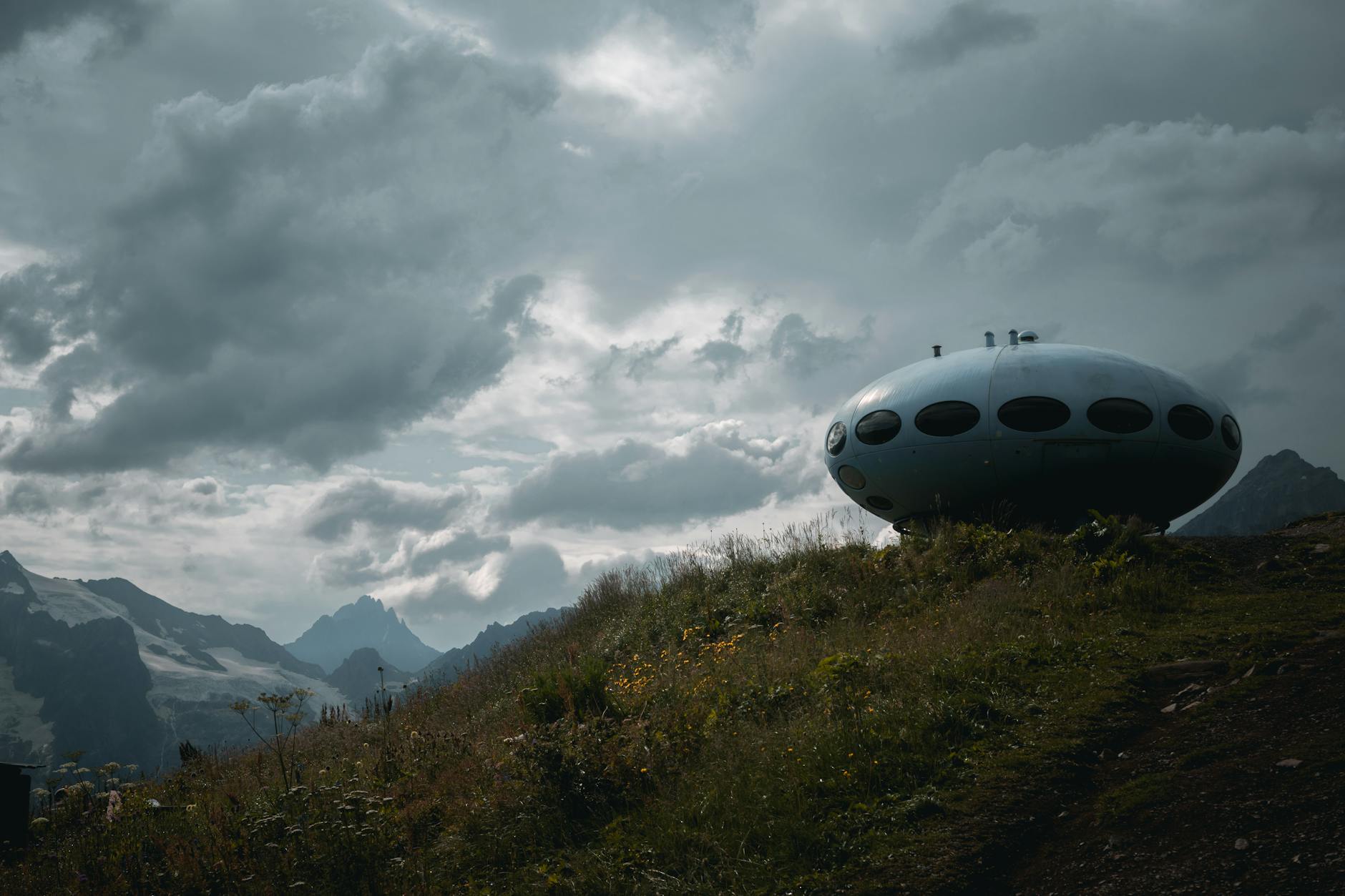









































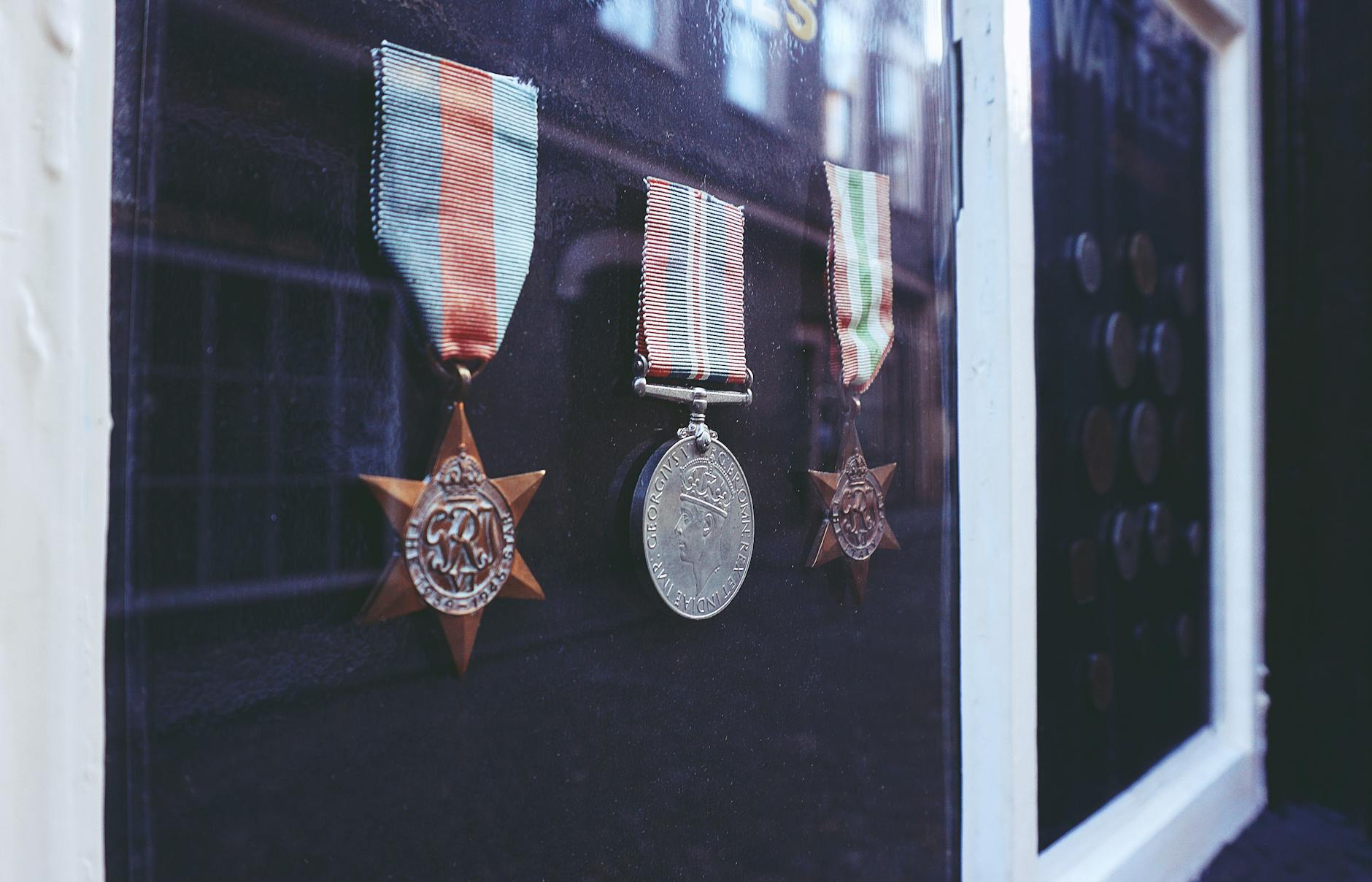















 In the
  This brings is to the
  Star Trek’s optimism of the future is a wonderful thing. I do wonder though what the real effect of an alien’s arrival on Earth would be.
 as I count audio books as a part of that target.
 Unstable Orbit